

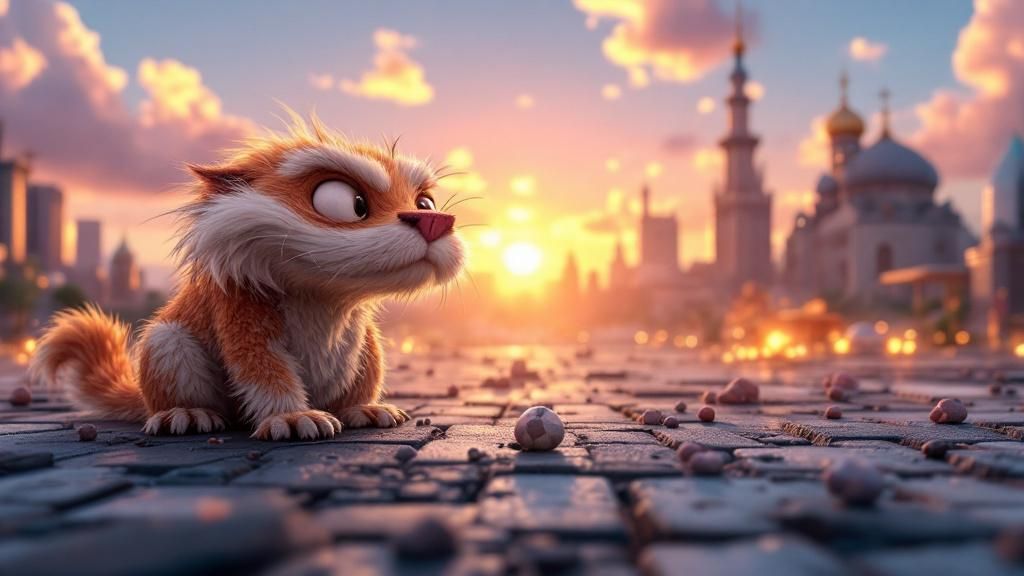
The animation industry is undergoing a significant transformation as studios leverage state-of-the-art visual effects technology to redefine what’s possible on screen. From machine learning-based character animation to live rendering engines, these innovations are transforming creative workflows and enabling artists to achieve increasingly ambitious visions. This article investigates how top animation houses are deploying these cutting-edge tools to push artistic boundaries, enhance storytelling capabilities, and deliver visually striking experiences that engage viewers worldwide.
Innovative Visual Techniques Transform Virtual Content Creation
The animation sector is experiencing a profound shift as studios embrace cutting-edge rendering technologies that fundamentally alter how digital narratives are crafted and presented. These groundbreaking techniques allow creators to attain unprecedented levels of visual fidelity and realism, transforming the terrain of digital storytelling. By leveraging advanced computational techniques, animators can now produce imagery that matches live-action cinematography, whilst maintaining the creative flexibility that defines animation as an artistic medium.
Contemporary rendering innovations have made accessible access to professional-quality visual effects, allowing independent creators to compete alongside industry giants. The accessibility of these tools has sparked a artistic revival, encouraging exploration and creative boldness across the sector. Studios are discovering novel ways to blend classic animation techniques with advanced digital tools, resulting in unique aesthetic approaches that captivate audiences and expand the possibilities of what animation can achieve in modern media.
Instantaneous Ray Tracing Advancements
Ray tracing in real-time represents a pivotal turning point in computer graphics, enabling animators to view intricate lighting conditions instantaneously rather than waiting for extended render periods. This technological advancement has dramatically accelerated creative pipelines, allowing artists to determine artistic choices with immediate visual feedback. The ability to see production-ready illumination in live preview transforms how animators approach their craft, fostering enhanced creative authority and enabling increasingly sophisticated visual storytelling.
The implications of real-time ray-tracing technology go further than mere technical efficiency, profoundly altering the creative workflow itself. Studios can now iterate rapidly on visual ideas, testing lighting designs and atmospheric effects that would previously have required considerable processing time. This immediacy has enabled creative professionals to pursue more daring story-telling methods, resulting in visually sophisticated narratives that push the boundaries of what audiences expect from animation.
- Photorealistic light computations render instantaneously for immediate feedback
- Complex shadow interactions deliver exceptional depth and spatial authenticity
- Global illumination algorithms generate naturally illuminated spaces with full fidelity
- Reflective surfaces show precise light behaviour across diverse material types
- Atmospheric effects blend smoothly with ray-traced lighting systems
AI Implementation in Animation Production
Artificial intelligence has become a groundbreaking force within animation studios, fundamentally reshaping how artists approach character design, movement capture, and visual narrative. By streamlining repetitive workflows and delivering thoughtful guidance for artistic improvement, AI technologies allow animators to concentrate on complex creative decisions whilst machines process repetitive technical tasks. This mutually beneficial dynamic between human creativity and artificial intelligence has compressed project timelines markedly, permitting studios to produce intricate projects more efficiently without undermining creative quality or visual fidelity.
The incorporation of AI into animation workflows has opened up availability to sophisticated visual effects capabilities, empowering smaller studios to rival established industry giants. Machine learning algorithms analyse extensive repositories of existing animations, recognising trends and improving render efficiency in ways that would prove impossible through manual labour alone. Furthermore, AI-powered tools facilitate real-time collaboration between worldwide studios, removing location constraints and cultivating a broader collaborative space. As these technologies continue evolving, their ability to enable groundbreaking artistic directions becomes increasingly apparent.
Artificial Intelligence for Character Building
Machine learning algorithms have revolutionised character development processes by analysing emotional nuances and physical movements with exceptional precision. These systems can generate authentic facial expressions, body language, and gestural patterns based on large-scale training datasets, significantly reducing the time required for frame-by-frame animation. Animators utilise these intelligent systems to establish baseline character movements, which they then refine and adjust, combining algorithmic efficiency with human artistic sensibility. This joint working method produces characters that feel authentically alive whilst maintaining the unique creative direction individual studios seek.
The application of artificial intelligence extends beyond mere motion creation, encompassing personality development and consistent characterisation throughout longer stories. Complex algorithms assess script content and character backgrounds, proposing behavioural traits and emotional reactions that correspond to existing character development. This AI support maintains story consistency whilst enabling creative professionals to explore creative variations and exploratory techniques. Studios cite significant gains in character believability and audience emotional engagement, showing that technical tools and creative skill can truly strengthen each other.
- Forecasting models predict character movements from limited data inputs
- Neural networks produce lifelike facial features conveying emotional content
- Machine learning systems maintain uniform character conduct throughout productions
- Automation tools reduce manual animation labour by approximately 60%
- Artificial intelligence solutions enable quick refinement and creative experimentation throughout development stages
Motion-Capture Technology Attains New Heights
Motion capture technology has undergone a significant revolution in the past few years, reshaping how animators bring characters to life. Modern systems now provide unprecedented accuracy and instant processing abilities, enabling studios to record detailed acting with extraordinary detail. These developments allow creators to translate human movement into digital characters with impressive accuracy, maintaining the fine details that make performances emotionally resonant and authentically compelling.
The integration of artificial intelligence with motion capture workflows has significantly improved creative possibilities. Studios can now handle vast amounts of performance data immediately, enabling continuous improvement and experimentation at unprecedented speeds. This technological fusion has democratised high-quality motion capture, making sophisticated animation techniques accessible to studios of diverse capacities and funding levels, ultimately enriching the diversity of animated content available to audiences.
Volumetric Capture Systems
Volumetric capture represents a fundamental change in how three-dimensional performance data is gathered and deployed. Unlike conventional marker-tracking approaches, volumetric capture documents full environments and actions as three-dimensional point clouds, allowing remarkable creative freedom. This approach allows filmmakers and animators to adjust camera placement, modify lighting conditions, and explore scenes from countless different angles, reshaping post-production pipelines and creative choices.
The applications of volumetric capture go well past conventional character work. Studios are leveraging this technology to capture complex interactions between numerous performers, environmental dynamics, and sophisticated physical effects. The resulting captured material furnishes animators with extensive spatial detail, allowing them to create more realistic interactions and sophisticated visual narratives that would be substantially more demanding using standard motion capture approaches.
- Real-time volumetric playback provides immediate creative feedback and adjustment
- Multiple camera setups record action from many concurrent angles
- 3D point cloud information enables flexible camera positioning during post-production work
- Integration with virtual production environments simplifies teamwork processes significantly
- Improved positional precision improves performer interaction and environmental realism markedly
Industry Collaboration and Future Prospects
The animation sector stands at a critical juncture where cooperative efforts between studios, technology providers, and creative institutions is reconfiguring the sphere of visual storytelling. As cutting-edge VFX technology grows more advanced, studios acknowledge that pooled expertise and joint development drive advancement across the sector. This collaborative model fosters an environment where breakthroughs benefit the entire industry, elevating standards and allowing independent producers to utilise technology once exclusive to major production companies.
Looking ahead, the combination of AI technology, distributed computing, and live rendering presents significant potential for animation studios. Leading professionals anticipate that sustained commitment in collaborative research initiatives will expand access to high-end VFX solutions. The forthcoming scenario projects a better connected network where companies both large and small contribute to and benefit from technical innovations, ultimately expanding the imaginative potential accessible to filmmakers and audiences alike.
Multi-Studio Creative Partnerships
Collaborative arrangements between animation studios represent a fundamental shift in how the industry addresses technological development and creative excellence. By combining resources and knowledge, studios tackle intricate technical problems more efficiently whilst sharing the significant financial weight of research and development. These collaborations go further than simple resource pooling, fostering genuine knowledge exchange that elevates the entire sector’s capabilities and encourages ambitious experimentation with new technologies.
Effective multi-studio projects illustrate that competition and collaboration can coexist harmoniously within the animation sector. Collaborative production ventures, technical standards groups, and shared research programmes build foundations where studios maintain their market advantage whilst improving shared technical expertise. Such partnerships offer considerable benefits for building accessible software tools and defining sector standards that serve creators across all production scales and specialisations.
- Shared research initiatives accelerate technological advancement and innovation
- Joint funding approaches diminish studio financial strain substantially
- Collective development initiatives create industry standards and best practices
- Knowledge-sharing networks reinforce creative sectors and industry connections
- Open-source tool development democratises access to premium visual effects
