

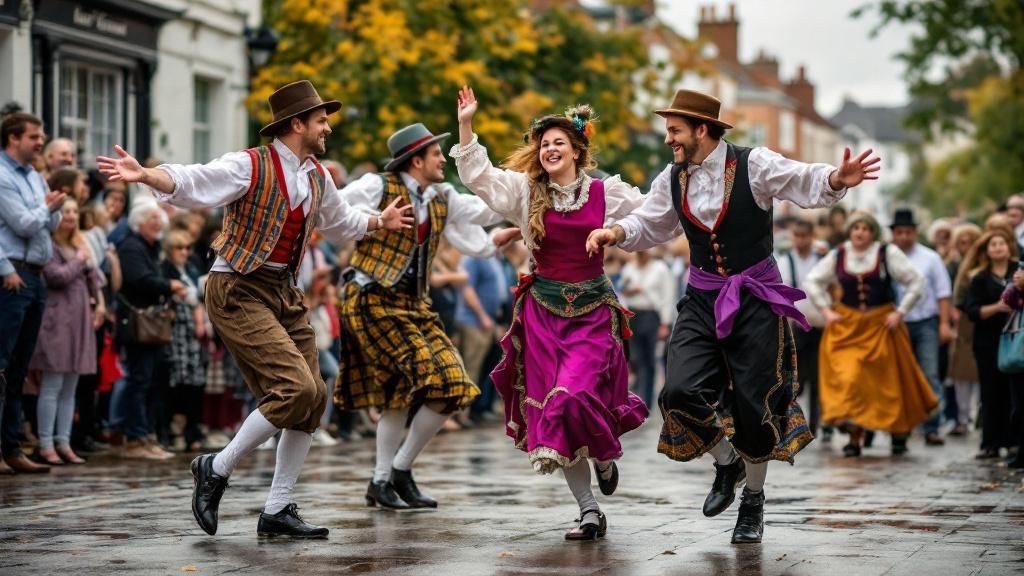
Once dismissed as a nostalgic echo of England’s pastoral past, Morris dancing is undergoing an unexpected revival amongst Britain’s younger people. From academic organisations to country spaces, practitioners in their twenties and thirties are reviving interest in the intricate steps, jingling bells, and colourful costumes that have defined this ancient custom. This article investigates the factors driving this artistic renaissance, considers how contemporary performers are reimagining the tradition, and considers what this revived engagement reveals about current British views towards tradition and social connection.
The Cultural Resurgence of Morris Dancing
The return of Morris dancing amongst young people across Britain demonstrates a notable departure from decades of declining participation. What was once perceived as an purely rural or older pursuit has evolved into a vibrant cultural phenomenon, with student societies, urban dance groups, and local organisations enthusiastically adopting the tradition. This revival questions long-held stereotypes and demonstrates that young people today find genuine value in maintaining and honouring Britain’s cultural heritage, breathing new life into practices that looked set for obscurity.
This renewed enthusiasm goes further than basic heritage nostalgia; young performers are deliberately transforming Morris dancing for contemporary times. They incorporate contemporary music, try out inventive dance routines, and create welcoming groups that accept people regardless of background or prior experience. The trend reflects a wider cultural change wherein British youth actively pursue authentic connections to their ancestral traditions whilst at the same time reshaping what tradition means, fostering a living conversation between historical authenticity and modern artistic interpretation that speaks to the values of their generation.
Why Younger Generations Are Taking Up This Traditional Art Form
Morris dancing’s attraction for younger generations goes well past nostalgic curiosity. Contemporary dancers embrace the art form’s rich cultural heritage whilst recognising its ability to enable creative expression and social connection. The openness of modern Morris groups, combined with their welcoming approach, has reshaped the perception of this traditionally insular pursuit. Young people are finding that Morris dancing delivers a genuine alternative to standard recreational pursuits, providing both physical challenge and authentic social connection in an progressively computerised world.
Sense of Community
In an era characterised by community breakdown, Morris dancing groups offer young people with concrete social networks rooted in common principles and collaborative practice. The welcoming character of modern Morris groups actively welcomes newcomers irrespective of background or experience, nurturing authentic bonds and meaningful connections. Participants often describe their dancing cohorts as family units of choice, offering emotional support and a sense of place that extends well beyond the performance season. This communal feeling becomes particularly valuable for young people navigating university or early career transitions.
The joint structure of Morris dancing inherently fosters collective togetherness and reciprocal obligation. Each dancer’s input directly influences the group’s visual harmony and rhythmic precision, creating interconnectedness that strengthens community ties. Many young dancers note that their Morris groups foster authentic connections in ways that standard social spaces frequently fail to achieve. The joint investment to sustaining and advancing this cultural tradition creates a powerful sense of shared mission amongst members.
Physical Activity and Health and Wellness
Morris dancing demands substantial bodily effort, blending cardiovascular exercise with intricate movement control and muscular conditioning. Young dancers gain improved fitness levels whilst engaging in activity that feels culturally meaningful rather than merely utilitarian. The repetitive, rhythmic character of Morris footwork offers meditative qualities alongside physical conditioning, enhancing mental wellbeing. Participants frequently cite the holistic health benefits as a main reason for sustained involvement in their local Morris groups.
Beyond heart health advantages, Morris dancing cultivates body awareness and spatial perception and physical self-assurance, particularly valuable for young people dealing with body image worries. The emphasis on accuracy and technical skill and synchronized movement shifts attention away from appearance-based anxiety towards capability and achievement. Moreover, the open-air staging tradition associated with Morris dancing encourages participants to engage with natural environments and the rhythms of the seasons, enhancing mental health through engagement with the natural world and cultural heritage.
Regional Differences and Modern Adaptations
Morris dancing traditions show substantial variation across Britain’s areas, with each area creating characteristic forms embodying local heritage and geography. The Cotswolds preserve the energetic, dynamic “Cotswold” approach, whilst the North West prefers the more elaborate “Northwest” tradition featuring intricate dress and intricate formations. Emerging performers are enthusiastically embracing these area-specific traditions, participating in training and events to master traditional practices whilst appreciating the cultural nuances woven throughout each practice. This geographical diversity offers present-day artists with multiple entry points into Morris dancing, enabling them to engage with history embedded in their own communities.
Modern adaptations are simultaneously expanding Morris dancing’s appeal outside traditional contexts. Younger practitioners integrate contemporary music, experimental choreography, and inclusive casting practices, challenging historical gender and age restrictions. Mixed-gender sides and LGBTQ+ Morris groups have developed, fundamentally reshaping the tradition’s social dynamics. These innovations maintain the essential character—rhythmic footwork, bells, and celebratory spirit—whilst rendering the practice more accessible and relevant to twenty-first-century participants. Such imaginative reimagining demonstrates that heritage traditions needn’t remain static, successfully bridging historical authenticity with modern sensibilities.
The Prospects of Morris Dancing in the United Kingdom
As Morris dancing remains popular with younger audiences, the tradition stands at a turning point. Contemporary dancers are actively reshaping the form whilst maintaining its cultural heritage, introducing fresh choreography and inclusive practices that appeal to modern sensibilities. Universities document unprecedented enrolment in Morris societies, whilst festivals attract unprecedented numbers of young participants. This momentum suggests the art form is moving beyond nostalgic curiosity to genuine cultural movement, building lasting structures for long-term growth and continued relevance within British communities across the country.
Looking ahead, Morris dancing’s trajectory appears quite favourable. The intersection of social media promotion, straightforward instruction approaches, and younger generations’ hunger for authentic communal bonds creates ideal conditions for thriving. Organisations are investing in mentoring initiatives and area-based tournaments, fostering talent pipelines and ensuring knowledge transfer between seasoned and emerging dancers. Should this enthusiasm endure, Morris dancing may finally escape its reputation as exclusively tradition-centred, instead becoming acknowledged as a lively, changing tradition that meaningfully enriches contemporary British society and strengthens communal bonds across generations.
